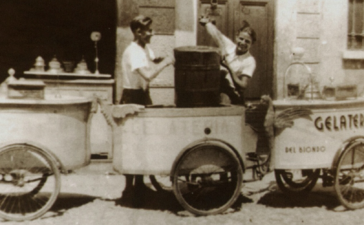

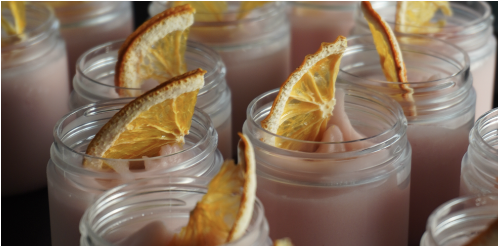
The evolution, interest, and appreciation of sorbet over time guarantee its validity and appeal, historically, culturally, and in terms of taste. Luciana Polliotti recounts its history, right up to the present day. Two recent, different events showcased its versatility: one with suggestive and exciting spirits, and the other with spices, powerful emotional catalysts. At the center of it all are the master gelatieri, heirs to the superb artisans who inspired them.
We could call it “historical cycles” when thinking about the centuries-old journey of the sorbet, which continues today in various forms, such as the gelato cocktail. In his work “New Science”, the philosopher Giambattista Vico spoke in the mid-eighteenth century (1744) of history as a cycle of events that tend to repeat over time in new and different forms. As Luciana Polliotti, journalist and historian of artisan gelato, points out, recalling people, studies, and recipes of what she calls the “progenitor of modern gelato,” sorbet has endured through different experiments and preparations. It was brought into vogue, then forgotten, only to be rediscovered and appreciated, as is currently happening in two different, but equally engaging occasions we followed, which yielded interviews and preparations.
Let’s start with Florence, with the latest event, the Florence Cocktail Week, conceived and directed by Paola Mencarelli. It featured sorbet in the form of a gelato cocktail during an event that has garnered great acclaim over the years, not just in the city and region (with Tuscany Cocktail Week), but also outside, from Venice to Cortina d’Ampezzo, Bl, and from Amalfi, Sa, to Corvara, Bz with the first reunion. Next, we stop in Milan, where at Tuttofood, we saw interesting proposals on the theme of spices within Mixology and Gelato.
ANCIENT SKILLS WORTH KNOWING
Ugh! The temptation for someone like me, who deals with the history of gelato, is to get to sorbet by telling the whole story, meaning the development of its production process over the centuries…
But I really think no one here cares about that, and if they do, they can visit the museum I curated, which is more alive than ever, in Anzola dell’Emilia, at Carpigiani. However, I can’t start this walk through sorbets without first mentioning Luca Caviezel, who collaborated with this magazine for many years, and his book “Science and Technology of Sorbets, Granitas, and Related Products”, for which I wrote the preface. This text, as happened with artisan gelato, marks the transition of our excellent products from infancy to maturity, from empiricism to science. Luca’s regret at the end of the millennium was explicit: “…the sorbet, today we find it battered, confused with fruit gelato in some gelato shop window (…). Poor sorbet, what happened to it? Without the gelato maker noticing, that mythical product of ours, the progenitor of modern gelato, was set aside or even distorted”.
I know why it was set aside, but I’m not telling you. Go read Luca’s book and you’ll find out. The noble sorbet, brought to Paris by the young and brilliant Palermo native Procopio Cutò, so fashionable in the eighteenth and nineteenth centuries up until the early twentieth century, is the progenitor of modern Gelato, mentioned by Denis Diderot and Jean Le Rond d’Alembert in the Encyclopédie, who wrote a large part of it at the tables of the Café Procôpe. Among other things, Procopio, who opened his Café in 1683, hosted the Enlightenment philosophers, welcoming them with free paper, pens and ink. The hospitality continued with his son Alexandre, who later took over the famous Café.
And he sold them a product that, until then, could only be tasted at Court: the sorbet. I remind readers that making sorbet at the time was extremely complex: from the very high costs of raw materials (snow, sugar, salt…), to the machinery (can you imagine?), to who had the necessary skills to make it. A gelato maker at the time was a very rare commodity. Almost impossible to find.
Anyway, precisely because it was rarely available and delightfully new, sorbet became an object of desire for the wealthy classes. It began to be celebrated by the most famous authors of literature and theater, such as Goldoni, Proust, Tolstoy, Stendhal, Balzac, Mann… and even Giuseppe Garibaldi or, in the twentieth century, by Nobel Prize winner for Literature Matilde Serao, Tomasi da Lampedusa, Dacia Maraini, and many others. If we want to find traces of sorbet in past centuries, we ust (it seems obvious today, but it wasn’t at the time) study the recipe books of the great chefs of Italian and European cuisine, such as Antonio Latini, Vincenzo Corrado, Vincenzo Agnoletti, Francesco Leonardi, Chapusot, Vialardi, Escoffier, or scholars like Pellegrino Artusi and finally our Giuseppe Enrico Grifoni, a gelato maker who, at a certain point, set the standard. It is in those recipe books that we find a multitude of sorbet varieties and other frozen compositions.
The debate among specialists of cold desserts about whether a frozen product without the presence of fine wines or liqueurs could be called “sorbet” has been resolved (it can be called sorbet with or without alcohol). However, this “problem” has been replaced by a new hurdle: the inclusion or exclusion of egg white or meringue in the mixture to be frozen. In fact, it is the whipped egg white, which incorporates clouds of air inside, that makes the sorbet appear so light, less cold, and extremely refined.
Therefore, it doesn’t matter if it’s alcoholic, if it’s made with fruit syrups or finely blended fruit, or if it’s made with flower petal infusions, aromas, coffee, cocoa, or spices: what makes the difference is the cloud of egg white that gives the person tasting the sorbet that sensation of intoxicating cold sweetness. Luca called it “sorbetto spongato” (meaning sponged sorbet). It is this ingenious product that has inspired the most enlightened minds and hearts in world literature. And if it’s impossible today to make sorbet with raw whipped egg white, well, there are vegetable products that excellently fulfill the same, yet indispensable, function. So, make way for experimentation, without forgetting that the sorbet crystals must be extremely fine, imperceptible. And let the imaginative creativity of the gelato makers have its space, while keeping the aforementioned parameters firmly in place. Today, Luca would be happy to see that Sorbet is experiencing a new life, new interpretations, and a new role: the aperitivo. Dr. Filippo Baldini wrote in 1775/84: “Since men did not arrive all at once at the State in which we see them today but have improved step by step. Therefore, frozen drinks are a product of more refined human reason and form one of the many consequences of a well-ordered society, that is, the useful and the direct”.
“Punch alla romana” was very fashionable from the beginning of the nineteenth century in Europe, but also in Russia and Turkey; its origins probably date back to eighteenth-century Papal Rome, whose cuisine was among the most sought-after and refined in the world.
The Confetturiere Piemontese, 1780
– Flower Sorbet
“Put a small handful of carnation petals in a mortar, pound them very finely, then dissolve them in a pint of water, add half a pound of sugar, and when it is melted, shake the water, pouring it three or four times from one vessel to another. Then pass it through a fine sieve and put it in the gelato maker to freeze”.
Alcoholic Sorbets: Punch alla romana
This first recipe is part of an important legacy of recipes by Leonardi, who was a splendid globetrotter and active in Russia for a long time, as cook to Catherine II.
Francesco Leonardi, 1808
“Put three pounds of clarified sugar, cooked to Lissé, and cold, in a white bowl. Pass the juice of 8 or 10 le-mons, depending on how large and acidic they are (from which you have first cut the peel), through a silk sieve. Add half a glass of fresh water and half a glass of Jamaican Rum, mix, taste, and pour into a small gelato maker to freeze as usual, and serve in jars, or as you like”.
Anonymous, 1820
This other recipe, twelve years later, is by an Anonymous author and was found by Caviezel in an archive in Canton Ticino. It reports the introduction of whipped egg white into the freezing mixture. From that date, we find the inclusion of egg white in many sorbet recipes, which thus transforms into an evanescent marvel. Here it is. “Take 6 dl of sugar cooked to petite Lissé, the juice of 40 lemons, half a liter of water. Put this composition in the gelato maker and gradually incorporate four egg whites, whipped until stiff, and the rum (one glass maximum). Vigorously work the mixture, which must be rich. This sorbet is a little liquid and must be consumed as soon as it comes out of the gelato maker. Maraschino or Kirsch can be substituted for Rum”.
Auguste Escoffier, 1902
Here we change century, and in his Guide Culinaire, Escoffier includes Italian meringue as a characteristic element in the alcoholic sorbet. He distinguishes between liqueur sorbets (and recommends Porto, Samos, Marsala, Johannisberg Constance, Rhum, Kirsch, fine Champagne, etc…) and fruit syrup sorbets (not with fruit) such as pineapple, cherries, strawberries, currants, raspberries…
“Mix the necessary amount of dry white wine or dry Champagne with half a liter of syrup at 22 degrees, then bring it back to 17 degrees. Add the juice of 2 oranges and 3 lemons ; a thin ribbon of lemon zest and one of orange; leave to infuse for an hour. Adjust the syrup to 18 degrees. Pass to the gelato maker, keeping the frozen mixture slightly stirred, incorporate one quarter of its volume of Italian meringue, making the proportion of 2 egg whites and 100 grams of sugar”. When serving, complete with a deciliter of rum poured gradually into the mixture.
Enrico Giuseppe Grifoni, 1911
In his very important Treatise, this generous Neapolitan gelato maker transplanted to Bologna gives posterity a nourished series of recipes, each more interesting than the last.
Imperial Punch. “Take 800 g of sugar and dissolve it over the fire with one-fifth water and two vanilla sticks. Once this syrup is made, let it cool, then add the juice of one orange and two lemons, the thin peel of half an orange
FROM FLORENCE… Room for the New Gelato with the Spirits
The 2025 edition, the 8th of Florence Cocktail Week (FCW), was a great success in terms of appreciation and public attendance. This event was created to spread the culture of Mindful and Responsible Drinking and to promote Quality Mixology throughout Tuscany. Organized and directed by Paola Mencarelli, the Italian creator of Cocktail Weeks and an expert in catering and mixology, it involved 60 Cocktail Bars and Hotel Bars in the City of the Lily from April 7 to 13. This year, it introduced the new format Gelato with the Spirits, in which 11 gelaterias participated. Throughout the week or for a single evening, they shared their interpretation of spirits in the gelato shop, using them as ingredients in the gelato. It was a seven-day spread of events that also opened doors to restaurants, pizzerias, and pastry shops, and, as anticipated, gelaterias under the names Dining, Pizza, Pastry, and Gelato With The Spirits. This was a great promotional and visibility opportunity for this product, which we hope will have a follow-up, given the enthusiasm of the artisans, the attendance, the public consensus, and the media participation achieved.
The Importance of Synergies and Connections
The Florence Cocktail Week and its new formats were a significant operation that introduced different worlds linked by interesting affinities. We talked about it with Paola Mencarelli, who deserves credit for strongly wanting the involvement of gelatieri and other artisans. This was very popular with the public and insiders in an initiative that brought some closer to and consolidated others in the world of cocktails. Some experimenting reached high levels, others perfected the management of alcohol. “Some of them,” she explained, “met valid Tuscan spirits producers with whom they established connections and contacts they will cultivate, creating important synergies to differentiate their production, a starting point that was relevant for many. Everyone went their own way, discovering Spirits and Bitters, reinventing their own tastes and those of the past. Hers was a forward-thinking decision, for which she involved Adriana Tancredi, director of Gelato Festival, who selected and involved the gelatieri. They were flattered to have their say in a highly specialized context with its own dynamics, like that of cocktails. This is a recognition of the capabilities and peculiarities of this category, especially those already interested and prepared for this world, who feel they are the heirs of superb artisans who created historically important sorbets in the past. They developed suggestive recipes and products specifically for connoisseurs and enthusiasts who did not hesitate to build new routes for themselves to taste the different creations proposed even in the following months. A win-win initiative for the city and the insiders that expanded the target of gelato cocktail enthusiasts and the range of flavors, developing specific ones, and creating different circuits for their customers.
Author’s Selection
“I accepted Paola Mencarelli’s invitation with great enthusiasm, calling Florentine gelato and pastry makers who, in my opinion, already had an interest and attention towards the gelato cocktail in their DNA,” replies Adriana Tancredi, director of Gelato Festival. She, in turn, seized the opportunity to carry out an important and demanding selection task for the first time for this event, which was also open to them in the city. “It couldn’t have been otherwise, knowing many artisans in the city, more gelato makers than pastry chefs, clearly, and having experienced the sector’s dynamics for some time,” she recounts.
“The invited participants responded with conviction and curiosity and ventured into a different product from what they usually produce in the gelato shop, experimenting and discovering ingredients, tastes, and combinations that provided them with new ideas and stimuli for their work”. “This is because alcohol had to be part of the gelato cocktail ingredients, to be inside the recipe. It was therefore fundamental to manage this component well, and I must recognize that the results were very positive”.
An Event within the Event: The Vivoli Affogato Bar Opens
During the FCW, the Vivoli Affogato Bar, the second Florentine store of the historic Gelateria Vivoli, inaugurated at number 9 on via Isola delle Stinche, just one civic number away from the historic location at 7r. The Gelateria Vivoli was founded by Serafino Vivoli in 1929 and is now led by Silvana and Patrizia Vivoli together with Silvana’s husband Simone and their two children Lorenzo and Giulia, thanks to a space that became available almost unexpectedly. This opening brought the trend of the affogato gelato back into vogue. This appeal particularly concerned young people, Italians and foreigners, because the lines to taste it in the historic place have never been missing, as the images testify and as Silvana Vivoli, the tireless creative soul with the contagious enthusiasm of this gelateria that is an institution in Florence, told us. The refined, retro sign of Vivoli Affogato Bar speaks for them. Here, this delight, starting from the classic one, “La Gran Crema al Caffè” (The Great Coffee Cream) with cream and espresso, which has always been immensely popular, reigns supreme in alcoholic form and in many other variations designed to accompany every moment of the day.The Affogato is a product “that we have always made throughout our history, as seen in our photos from the 70s, because the 1966 flood took everything away from us,” Silvana is keen to specify. In the new venue, for the FCW, “Affogato d’Arancio e di Spirito” (Affogato of Orange and Spirit) was presented, made with a Tuscan Malt Whisky Super Tuscan Wine Cask Florentis from the Tuscan producer Winestillery, a cream and bitter orange peel gelato. And what is the recipe? – we asked. “You know we don’t give away our recipes…” – Silvana replies slyly. This time we were hoping! All that remains is to go and taste this and the new line of affogati on site: Slow Gin and rice, Tuscan Vermuth Rosso and Pear, Tuscan Bitter and Gianduia, Tuscan Dry Vermuth and strawberry, Old Tom Gin and peach, and London Dry Gin and lemon. We managed to get a preview for autumn, but to find out what it is, you have to put in a little effort and fly to Orlando.
Study and Personalization
“To participate in the FCW event, I didn’t want to start from the balance of an existing cocktail or a twist. I wanted to create my own particular proposal and select the spirits based on a preference of genre, specifically for Gin, for which I have my subjective preference, but, above all, I looked for a company in which, even before the validity of the production, there was a history and an ethics,” explains Cinzia Otri, master gelatiera of Gelateria della Passera, regarding her choices. “These, in my opinion,” she continues, “are essential values, for which I chose Distilleria Indie located in Garfagnana, the first zero-impact distillery. I believe the work that Saverio Bertagni and Francesco Marcucci do is incredible. Starting from a Gin, in this case Ambrosia Gin with Sage and Rosemary botanicals, I simply mixed a Kombucha, Legend Kombucha from Orto Fermentato in Pavia, which was also flavored with sage and rosemary. To this, I wanted to infuse a very Florentine floral note, that of the iris, by adding a minimal amount of orris root powder, or “giaggiolo” as we call the iris in Florence, our symbol”. To obtain the slightly purplish tint, the artisan said she added Butterfly Pea Flowers. “Once the Pussy Different Frozen was created and ‘consecrated’,” she explains, “I moved on to balancing for the sorbet, which was also presented in the recipe. ‘Since 2011, cocktail sorbets have been in the counter of my gelateria, especially after 6:00 PM. Many of these,’ she concludes, ‘are part of our menu, and, alternating them by variety, it is possible to find them now on a weekly basis, and this latest creation can also be tasted”.
A Tribute to the “Decisive and Citrus Personality of Fusetti”
“For the Florence Cocktail Week, we wanted to create a sorbet—or rather a Sorbitter—that paid tribute to Bitter Fusetti,” begins Paolo Pomposi, who heads the three Gelaterie Badiani in the city. “No other ingredient, no distraction, just him. His decisive and citrus personality inspired us to work in purity, to exercise essentiality and respect for a truly well-made raw material,” which he used for his gelato cocktail and for which we propose the recipe. He focused on gentian, rhubarb, and cinchona with the special bitter note of quassia, to which bitter orange and chinotto are added. These are the components of Fusetti with which he created the “Sorbitter” that won over many. This is how Master Gelatiere Pomposi summarized his reasons for choosing and methods for realizing his creation. In addition to participating in the Florentine event, he has also recently been in the news for opening a new gelateria, this time in Japan, after those in Great Britain, Spain, and France.
Flair and Experimentation
Two classic favorites for the least classic and most sparkling of Italian gelato makers and beyond. We are talking about Vetulio Bondi of I Gelati del Bondi in his 3rd participation in the FCW with his gelato cocktails. This time he prepared a Mojito with Santa Teresa 1796 and a Bloody Mary with Yurt Premium Vodka, specifically developed for this event. Two mixology classics: “the Mojito because it’s fresh, ideal, and very appreciated in these months with very high temperatures, and I kept it in the shop all season, and the second because it is suggestive and appetizing. Both were made with interesting spirits: the first with the famous rum mentioned above, and the second with Yurt Premium Vodka, which is still little known in our sector,” he explains. “I chose two alcoholic ingredients of great substance: the Santa Teresa 1796 rum, a fragrant Venezuelan rum, in which you can detect notes of wood, vanilla, caramel, and dried fruit, and a soft and round taste with a persistent finish that can be felt in the gelato, enriched with sweet spices and a touch of honey. The special Vodka immediately appealed to me for its product particularity before its taste. It is a Vodka from Kazakhstan, a country with a Muslim tradition that appreciates high-quality alcoholic beverages, which is not so obvious. It presents a strong and refined identity in taste, and a bottle with an elegant design, both traditional and contemporary, that echoes the shapes of the yurt, the tent of the nomadic peoples of Central Asia, a symbol of travel, hospitality, and sharing that convinced me and seemed to have the same effect on FCW admirers—he concludes”.
Cultural and Artistic Inspirations
“Our gelato cocktail Viva La Vida with Gin, ginger beer, fresh mint, and lime zest, as shown in the recipe, is a special edition dedicated to the famous Mexican artist Frida Kahlo”. “Lavinia Mannucci, who leads Gelateria Caminia with her family, explains, “It is an initiative implemented to express a deeply positive and inspiring message for personal enrichment and self-confidence. It is a project that celebrates the avant-garde, versatility, creativity, and iconicity of a woman and an artist of great cultural and human value, who made a choice of timeless passion and love. It is a flavor,” she comments, “that has attracted local customers and tourists because it is fresh, pleasant, and unexpected, which we alternate, as we already do with the Flavor of the Week”.
Prestigious Themed Initiatives
Some events, in addition to the inauguration of the Vivoli Affogato Bar, which had gelato in common, contributed to enriching the extensive program of the Florentine event. We are talking about the 6 Open Days at the Distillery with a final gelato tasting. Fermenthinks opened its doors for a company tour with welcome drinks, free tastings, and a selection of specialties created for the FCW initiatives “Gelato with the Spirits” by DonaMalina Gelateria Cioccolateria, Gelateria Cioccolateria Magnolfi e Gelato, Gabriele Vannucci and “Pastry with the Spirits” by Gabriele Vannucci and Pasticceria Gualtieri. In addition to this, we mention the two tastings with La Sorbettiera Gelateria Artigianale, which presented “Yerba Tropicana,” the gelato with Yerbito created by master gelatiere Antonio Ciabattoni, during the Masterclass at Santa Cocktail Club “Montevideo – Firenze A/R”. We conclude with “Perfect Cubes for Bitter Fusetti: a very fresh evening,” the aperitivo at The Social Hub rooftop powered by Bitter Fusetti, Ice3, and Florence Cocktail Week. Gelateria Badiani brought a taste of the “Sorbitter Fusetti,” which we discussed, for the occasion, with 3 Guest Shifts “TCW Pop-Up Bar”.
… IN MILAN
The Added Value of Spices
It was an engaging initiative, “Mixology and Gelato,” organized by Italpepe and Carpigiani Gelato University, gathered at the spice company’s stand during TuttoFood at the beginning of May. On this occasion, attendees were offered the opportunity to have a special sensory experience where signature cocktails and artisan gelati met in a harmony of flavors. In addition to the companies mentioned, represented by Francesca Iannarilli, Marketing & Communication Director of Italpepe Vitaletti Academy Srl, and Kaori Ito, director of Carpigiani Gelato University, to best calibrate the gelato cocktail on which we are focusing, Coffee in infusion with Sichuan pepper, accompanied by fiordilatte gelato, were present Diletta Poggiali, Corporate Chef of Carpigiani Group, professor at Carpigiani Gelato University, and specialist in Food History and Culture, who prepared the gelato mixtures, and Cristian Lodi, founder and bar manager of Milord Milano as well as a Campari Academy trainer.
“Lodi was asked,” Iannarilli begins, “to interpret our seven sensory shades and the seven emotions connected to them, creating seven unique cocktails, including the one accompanied by gelato. With Diletta Poggiali, we found a unique talent in the use and enhancement of spices. Thanks to these presentations,” she explains, “we demonstrated how spices represent a concrete advantage for professionals in the sector: they are used in minimal quantities, the impact on food cost is limited, but they are able to give personality, originality, and refinement to every recipe. However, in the world of gelato, their use is still limited to the most common ones like vanilla and cinnamon, or trendy ones like the tonka bean”. In the Coffee in infusion with Sichuan pepper, accompanied by fiordilatte gelato, we caught the spicy note of this spice, a false-pepper like the Timut pepper used in other proposals at the event. “Sichuan pepper is a very high-quality ingredient, characterized by an unmistakable and intense aroma, capable of enhancing sweet and savory dishes, very appreciated in Asian cuisine. One of its most fascinating peculiarities is the tingling effect,” explains Iannarilli, “a slight sensation of tingling and numbness on the tongue due to the presence of molecules from the sanshool family (specifically hydroxy-alpha-sanshool), which stimulates the TRPV1 and TRPA1 receptors, responsible for the perception of heat and prickliness, and provides a singular sensory experience that enriches the tasting. In addition to Sichuan, Timut pepper is an interesting spice for pairing with gelato thanks to its particular aromatic profile, which is exceptionally fresh and citrusy, with notes reminiscent of grapefruit and passion fruit, accompanied by shades of lemon and eucalyptus. This false-pepper also causes the typical tingling on the tongue, is ideal for creative culinary experiments, and is perfect in sweet or audacious pairings: it marries magnificently with chocolate, fiordilatte gelato, and cocktails”.
We finally ask Iannilli if they are used to collaborations like this with gelato and mixology. “Certainly,” she replies, “these channels allow us to talk about the evocative power of spices and their extraordinary ability to arouse emotions. Through collaborations like these, Italpepe aims to overcome the conventional view of spices, offering a deeper and unprecedented understanding of their impact on taste and the emotional world in our events and masterclasses. It is a fascinating and engaging exploration, conducted with rigor and authority thanks to the constant support of university researchers and research centers that accompany Italpepe’s Vitaletti Academy on this journey. Spices, in fact, have the extraordinary ability to act as powerful emotional catalysts. Through their scents, flavors, the sensations they evoke, and the deep connections with memory and culture, they manage to transform a simple meal—even a gelato—into a rich, intense, and significant experience”.
E.B